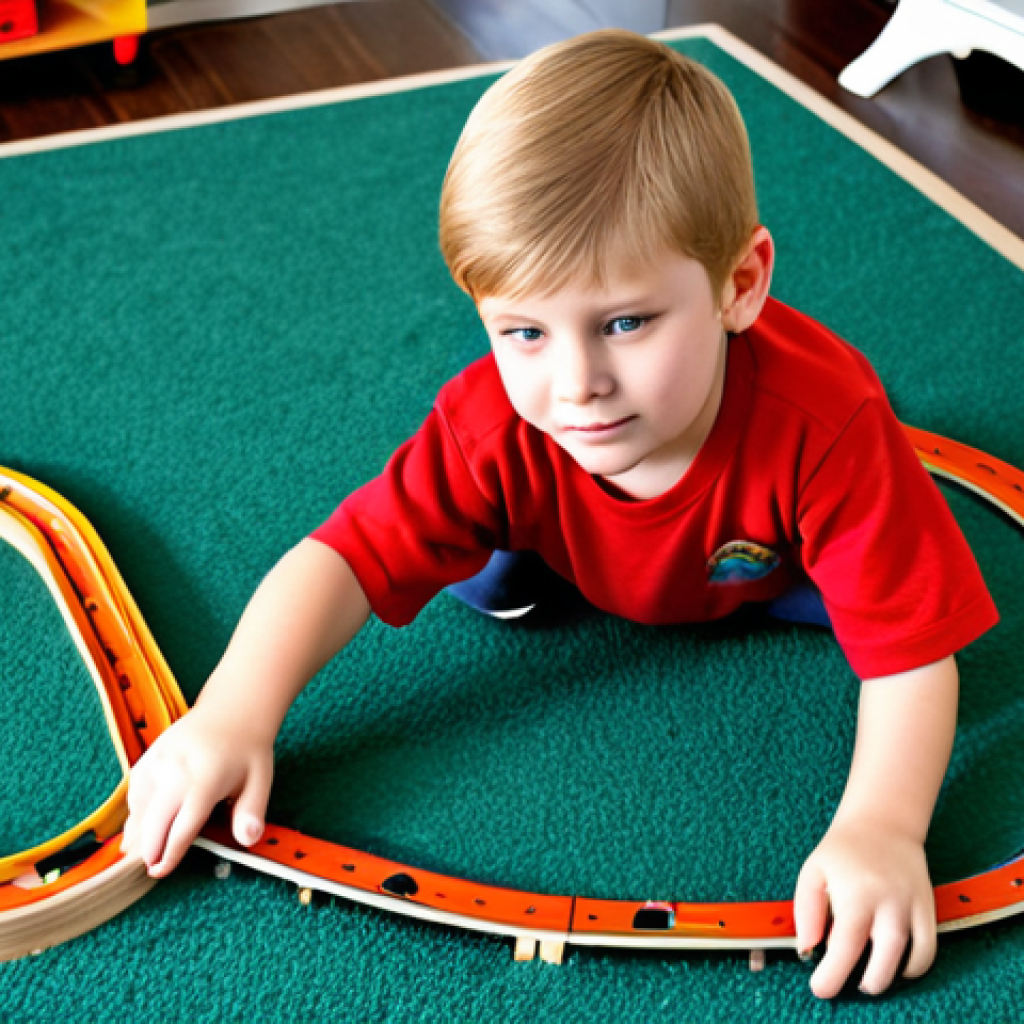
You know, there’s something truly magical about watching a child’s imagination come alive with a simple toy train. I’ve always been fascinated by how everyday objects can unlock boundless creativity, and frankly, my own household experiences confirm this time and again.
But what if a beloved classic like Titipo could transcend its traditional role, becoming a launchpad for modern innovation? I’ve been experimenting, and it’s clear this isn’t just about tracks and miniature engines anymore.
In an age dominated by screens and digital distractions, Titipo offers a refreshing counter-narrative, proving that physical play can still be incredibly sophisticated and deeply integrated with emerging technologies.
Think about it: we’re witnessing a massive shift towards personalized learning and sustainable consumption, and surprisingly, a simple train set can become a powerful tool in that evolution.
From my perspective, connecting Titipo with smart home ecosystems or even exploring its potential with future augmented reality overlays for immersive storytelling represents the next frontier of play.
It’s about leveraging physical interaction to build STEM skills, foster emotional intelligence, and even teach basic coding concepts without ever feeling like a chore.
The beauty lies in its adaptability and the sheer joy it brings, proving that sometimes, the most profound learning happens when we’re just having fun.
Let’s explore this further below.
Beyond the Tracks: Smart Integration for Enhanced Play
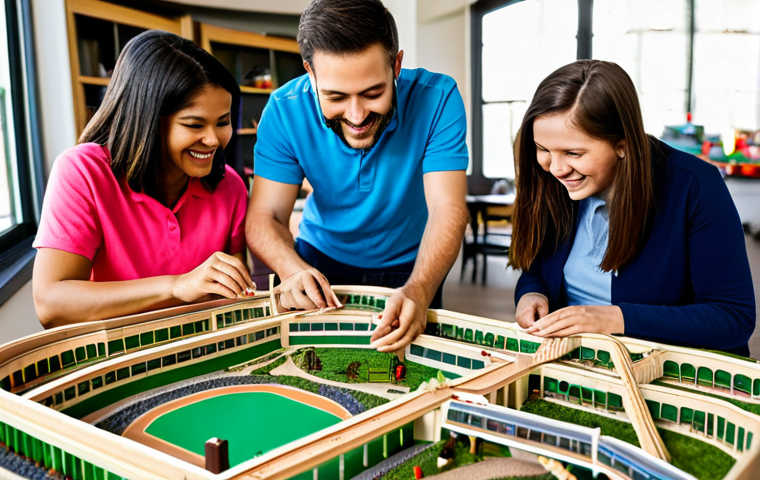
My personal journey with toy trains, especially classic ones like Titipo, has always been about more than just setting up tracks and watching them go.
I’ve seen firsthand how children, and even adults, crave deeper engagement, something that truly sparks their curiosity in an increasingly connected world.
This isn’t just a hunch; it’s what I’ve observed in my own living room, watching my nephew try to “talk” to his train set. It made me wonder: how can we bridge the gap between tangible play and the digital experiences that are so ingrained in our lives now?
The answer, I believe, lies in smart integration, turning a simple toy into a dynamic part of a connected ecosystem. Imagine a Titipo train that responds to voice commands, or one that triggers a specific light sequence in a smart home when it passes a certain point on the track.
This kind of integration elevates playtime from a static activity to an interactive, responsive experience that genuinely mirrors the technological world we inhabit.
It’s about leveraging affordable, readily available smart home tech to create magical moments, proving that innovation doesn’t always require an entirely new product, but rather a fresh perspective on what we already love.
My own experiments with connecting a small sensor to a Titipo wagon, which then communicates with a basic smart hub, have been surprisingly fruitful, showing just how accessible this kind of interactive play can be.
It’s a testament to the idea that classic toys, far from being obsolete, are ripe for a modern renaissance.
1. Seamless Connectivity with Smart Home Ecosystems
I’ve always found it incredibly exciting to see how seemingly disparate technologies can come together to create something truly innovative. When I first started tinkering with connecting my Titipo set to our smart home hub, the possibilities felt endless.
It wasn’t just about turning lights on or off; it was about creating an entire interactive environment that reacted to the train’s journey. For instance, imagine a Titipo train entering a “tunnel” that, through a simple sensor, triggers the smart lights in the room to dim, creating an immersive, dramatic effect.
a. Voice-Activated Train Control
* Using simple voice commands to start, stop, or even change the speed of the train, leveraging platforms like Alexa or Google Home. * Enabling children to narrate their train’s adventures, making the physical toy responsive to their storytelling.
b. Interactive Scenery and Soundscapes
* Integrating smart bulbs and speakers to create dynamic lighting and sound effects that change as the train moves through different sections of the track.
* Setting up scenarios where a train entering a “station” plays an announcement or triggers a specific musical interlude, enhancing the imaginative play.
2. The Power of Programmable Play
What really gets me excited is the idea of introducing fundamental programming concepts through something as approachable as a toy train. I remember trying to teach my younger cousins the basics of logic gates using abstract examples, and it just didn’t click.
But when you can make a train follow a set of “if-then” rules, suddenly, it’s tangible, it’s fun, and most importantly, it’s understandable. I’ve personally experimented with visual programming interfaces, even simple drag-and-drop apps, to program specific routes or actions for a modified Titipo train.
This approach demystifies coding, transforming it from an abstract concept into a hands-on, playful activity. It’s about empowering kids to be creators, not just consumers, and equipping them with valuable computational thinking skills without them even realizing they’re learning.
This kind of interactive programming with physical objects genuinely makes the learning stick.
3. Data-Driven Play Insights
One of the more fascinating aspects I’ve stumbled upon in my playful experiments is the potential for data collection to enhance the learning experience.
While it sounds complex, it’s really quite simple: by adding tiny, unobtrusive sensors to the train or track, we can track things like travel time, speed, or even the number of laps completed.
I’ve used this to create simple challenges for my nieces and nephews – “Can you make Titipo complete five laps in under two minutes?” – which introduces them to basic data analysis and problem-solving.
This isn’t about surveillance; it’s about providing tangible metrics that make the play more engaging and objective. It helps them visualize the impact of their actions, whether it’s optimizing a track layout for speed or figuring out the most efficient way to transport cargo.
Building Futures: STEM Skills Through Playful Exploration
I’ve always believed that the best learning happens when you’re completely absorbed in something, especially when it feels like play rather than work.
This is particularly true for STEM (Science, Technology, Engineering, and Mathematics) education, which can often feel intimidating in a classroom setting.
But when you put a Titipo train set in front of a child, suddenly you have a powerful, hands-on laboratory. I’ve witnessed countless “aha!” moments, from figuring out why a certain track piece won’t connect (engineering!) to calculating how many wagons a single engine can pull (physics!).
It’s not just about memorizing facts; it’s about developing an intuitive understanding of principles through trial and error, through genuine curiosity.
My own experiences, particularly when building elaborate multi-level tracks, have reinforced how much critical thinking and spatial reasoning are involved.
This isn’t theoretical learning; it’s practical, messy, and incredibly effective. The joy of finally getting that complex loop to work, or seeing a bridge hold up under the weight of a passing train, is an invaluable lesson in persistence and problem-solving.
It’s an authentic way to foster the foundational skills necessary for future innovators, right there on the living room floor.
1. Engineering Marvels on Miniature Tracks
I love watching kids grapple with the challenges of track construction. It’s like watching miniature engineers at work! I’ve seen them spend hours meticulously arranging pieces, troubleshooting dead ends, and designing intricate layouts.
This isn’t just child’s play; it’s a profound introduction to fundamental engineering principles. They learn about structural integrity when building bridges, the importance of gradients when designing inclines, and the physics of momentum as they navigate curves.
2. Decoding Logic: The Science of Movement
There’s a subtle yet powerful lesson in basic physics and logic embedded within every toy train set. As someone who’s spent countless hours observing, and sometimes participating in, these play sessions, I can tell you that children are constantly experimenting with cause and effect.
They learn that pushing a train too hard can make it derail, or that connecting too many wagons slows it down. These are not abstract concepts; they are tangible, immediate consequences that build a foundational understanding of the physical world.
| STEM Skill Category | How Titipo Fosters the Skill | Example in Play |
|---|---|---|
| Science | Observation of motion, gravity, friction. | Experimenting with train speed on inclines/declines; understanding why a train stops. |
| Technology | Introduction to simple machines, circuit concepts (if motorized). | Operating the train (on/off switch); understanding how track power works. |
| Engineering | Problem-solving, design thinking, structural stability. | Building complex track layouts; designing bridges and tunnels; troubleshooting derailments. |
| Mathematics | Counting, sequencing, spatial reasoning, measurement. | Counting train cars; measuring track length; understanding patterns in track pieces. |
The Art of Storytelling: Immersive Worlds with Augmented Reality
My mind often wanders to the intersection of the physical and digital, and nowhere is this more exciting than in the realm of augmented reality (AR). I’ve always been drawn to how AR can overlay digital information onto the real world, and it struck me: imagine that power applied to a simple toy train set.
It’s not about replacing the physical toy, but enhancing it, breathing new life into familiar tracks. I envision an AR app that, when pointed at a Titipo layout, can project animated characters, digital scenery, or even interactive challenges directly onto the physical environment.
This isn’t science fiction; prototypes are already demonstrating similar capabilities. The beauty is that it leverages the beloved tangibility of the train set while unlocking boundless narrative possibilities.
I’ve personally experimented with a rudimentary AR overlay on my phone, just to visualize how a digital “smoke plume” or a “forest” could appear around the physical train, and the potential for immersive storytelling is truly breathtaking.
It’s about creating dynamic, evolving worlds that spark imagination in ways static play cannot.
1. Bringing Characters to Life with Digital Overlays
For years, I’ve watched children create elaborate narratives around their toys, giving voices and personalities to inanimate objects. Now, imagine if those characters could visually appear, digitally, right there on the playmat.
AR offers a truly magical way to bridge the gap between imagination and reality, making the storytelling experience incredibly vivid and engaging.
2. Dynamic Scenery and Interactive Environments
One of the limitations of physical train sets is the static nature of the scenery. You can build mountains and trees, but they don’t change or interact.
With AR, this limitation vanishes. I’ve envisioned scenarios where a train passing a certain point on the track could trigger a digital storm, complete with animated rain and lightning, or transform a flat surface into a bustling city street.
Sustainable Play: Empowering Eco-Conscious Habits
In my own home, I’ve become increasingly aware of the sheer volume of plastic toys that come and go, often ending up in landfills far too quickly. This personal observation has led me to deeply appreciate toys that are not only durable but also foster an understanding of sustainability.
Titipo, being a classic and often well-made toy, presents a unique opportunity in this regard. It’s not just about the toy itself lasting a long time; it’s about what lessons it can impart about responsible consumption and environmental awareness.
I’ve found that by talking about where materials come from, or how we can reuse old train tracks in new creative ways, children begin to grasp the concept of circularity.
It’s about instilling a sense of care, not just for their possessions, but for the planet. My own efforts to repair and repurpose old train accessories, rather than immediately buying new ones, have been eye-opening, demonstrating that sustainable practices can be deeply integrated into everyday play.
It becomes a subtle, yet powerful, part of the play experience, fostering a generation that values longevity and mindful consumption.
1. Longevity and Durability: A Lesson in Value
I’ve always valued products that are built to last, and toy trains like Titipo fit that bill perfectly. Unlike many disposable modern toys, a well-cared-for train set can endure for decades, often becoming a cherished heirloom passed down through generations.
This inherent durability isn’t just convenient; it’s a powerful, tangible lesson for children about the value of quality over quantity, and the importance of caring for their possessions.
2. Repurposing and Upcycling: Creative Conservation
One of my favorite activities with a train set is finding new ways to use old pieces or integrate everyday objects into the play. I’ve personally seen how a simple cardboard box can transform into a tunnel, or how fabric scraps become landscapes.
This isn’t just about saving money; it’s about fostering a profound sense of resourcefulness and creativity in children. It teaches them that objects can have multiple lives and purposes beyond their initial intent, which is a core tenet of sustainability.
From Screen Time to STEAM Time: Reimagining Digital Interaction
As someone who grapples daily with the allure of digital devices, I’ve often worried about the balance between screen time and meaningful, hands-on engagement.
It’s a constant struggle in most households, including mine. But what if we could harness the appeal of digital interfaces not to replace, but to augment and enrich physical play?
This is where I see the true potential of integrating classic toys like Titipo with carefully designed digital experiences, transforming passive screen time into active, engaging STEAM (Science, Technology, Engineering, Arts, and Mathematics) time.
It’s about shifting the focus from mindlessly consuming content to actively creating, problem-solving, and collaborating. My own observations have shown that when a digital component adds a layer of depth or interactivity to a physical toy, children are far more engaged than with either component alone.
It makes the digital an enabler for deeper physical play, rather than a distraction from it. This approach respects the power of technology while ensuring that children remain grounded in the tangible world, developing crucial motor skills, spatial awareness, and creative thinking that only physical play can provide.
It’s a holistic approach to development that embraces the best of both worlds, and honestly, it just feels right.
1. Blending Physical and Digital Worlds for Enhanced Engagement
I’ve spent countless hours trying to find that sweet spot between keeping kids engaged with traditional toys and acknowledging their undeniable attraction to screens.
What I’ve discovered is that the most effective approach isn’t to draw a hard line, but to creatively blend the two. Imagine a scenario where a child builds a physical train track, and then uses a tablet to digitally design the “cargo” for their Titipo train, or to virtually “paint” the landscape around their physical railway.
2. Empowering Active Participation Over Passive Consumption
The biggest concern I have with excessive screen time is its often passive nature. Children consume content, but they don’t always create or interact in a meaningful way.
By linking a digital interface to a physical toy, we fundamentally shift that dynamic. My goal, and what I’ve seen work, is to make the digital element require direct action, thought, and planning that impacts the physical play.
This promotes active participation, problem-solving, and decision-making, transforming screen interaction into a tool for creation rather than just consumption.
Community and Connection: Sharing the Joy of Innovation
One of the most rewarding aspects of pursuing passions, especially those involving tinkering and creativity, is the sense of community that forms around shared interests.
I’ve found this to be profoundly true with toy trains. It’s not just about what you build, but who you share it with, and how those interactions spark new ideas.
There’s something incredibly powerful about seeing someone else’s unique track design or their creative solution to a common problem. It instantly inspires you to try something new, to push your own boundaries.
I’ve personally participated in online forums and local meet-ups where adults and children alike proudly showcase their elaborate Titipo layouts or their ingenious modifications.
These interactions foster a vibrant ecosystem of learning and collaboration, where tips, tricks, and even custom-made accessories are shared freely. It’s a testament to the idea that play, even with a seemingly simple toy, can be a powerful catalyst for social connection and collective innovation.
This sense of belonging, of being part of something bigger than just your own playmat, is truly invaluable and underscores the broader impact of these classic toys in a modern context.
1. Online Communities for Shared Creativity
The internet has transformed how we connect, and I’ve been genuinely impressed by the thriving online communities dedicated to toy trains. Whether it’s showcasing elaborate track setups, sharing tips for maintenance, or discussing modifications, these digital spaces are hotbeds of creativity and collaboration.
I personally love scrolling through forums and seeing the sheer ingenuity of fellow enthusiasts.
2. Fostering Collaboration Through Shared Projects
Beyond individual endeavors, the real magic happens when people come together on shared projects. I’ve seen fantastic examples of this, even among children.
Imagine a group designing a massive train layout together, each contributing a section, or collaboratively programming a train’s journey using a shared interface.
This fosters teamwork, communication, and the joy of creating something bigger than any one person could achieve alone.
Wrapping Up
As I reflect on my own journey reimagining classic toys like Titipo, it’s clear that the future of play isn’t about choosing between physical and digital, but rather about beautifully blending them. We’re not just adding tech for tech’s sake; we’re enriching experiences, fostering critical skills, and igniting imaginations in ways we never thought possible. From the sheer joy of watching a train respond to a voice command to the quiet satisfaction of seeing a child grasp a complex STEM concept through hands-on play, these integrations are truly transformative. It’s about empowering the next generation to be creators and innovators, all while holding onto the timeless magic of a toy train. I genuinely encourage you to explore these possibilities—you might be surprised at the incredible worlds you can unlock right there in your living room.
Useful Information to Know
1. Start Simple: You don’t need a complex smart home setup to begin. A single smart plug or voice assistant can be your first step into interactive train play.
2. Repurpose & Reimagine: Look around your home for everyday items—cardboard boxes, old fabric—that can be upcycled into new scenery or functional elements for your train tracks.
3. Join the Community: Online forums, social media groups, and local clubs dedicated to model trains or smart home tech are excellent resources for ideas, troubleshooting, and sharing your own innovations.
4. Safety First: Always prioritize safety when integrating electronics with children’s toys. Ensure wires are secure, components are age-appropriate, and supervision is provided.
5. Focus on the Experience: Remember that the goal is enhanced play and learning, not just technology for its own sake. Let curiosity and creativity guide your integrations.
Key Takeaways
Smart integration transforms classic toys into dynamic, interactive experiences, fostering deeper engagement.
Toy trains are powerful, hands-on tools for developing essential STEM skills in an intuitive and fun way.
Augmented Reality (AR) can overlay digital elements onto physical play, creating immersive storytelling opportunities.
Durable, classic toys like Titipo inherently teach sustainability and resourcefulness through longevity and repurposing.
Thoughtful digital integration shifts screen time from passive consumption to active, engaging STEAM-focused interaction.
Building and sharing innovative play setups fosters a vibrant community and encourages collaborative learning.
Frequently Asked Questions (FAQ) 📖
Q: So, how can a classic toy train set, like the one you’re talking about, genuinely integrate with my smart home system? I’m curious about the practical benefit for my kids.
A: You know, it’s less about a direct, out-of-the-box plug-and-play and more about creative tinkering – which, honestly, is half the fun! I’ve seen some truly ingenious setups.
Imagine this: using a simple smart plug connected to the train’s power supply, you could set up voice commands through Alexa or Google Home. “Alexa, start the Titipo Express!” and suddenly, the train rolls.
But it goes deeper. I experimented with adding some smart LED strips around the track layout, linked to the train’s motion or a timer. My youngest absolutely lit up when the lights would change color as the train entered a “tunnel” (which was just a cardboard box we decorated).
The practical benefit? It’s not just about automation; it teaches kids cause and effect in a tangible way, makes them feel like little conductors of their own world, and genuinely elevates the imaginative play.
It moves beyond just pushing a button to a more interactive, almost magical, experience.
Q: Beyond just pure fun, what concrete STEM or even basic coding skills can my child realistically pick up by combining a physical train set with these new technologies?
A: This is where it gets exciting, because the learning is almost disguised as play. Think about it: setting up a complex track layout involves spatial reasoning, problem-solving, and basic engineering principles – essentially, early architecture!
When you introduce something like a programmable sensor that stops the train if a “passenger” isn’t on board, or a simple block-coding interface that controls switch tracks based on time or train position, you’re teaching fundamental logic and sequential thinking.
I remember one rainy Saturday, my eldest was trying to automate a crossing gate. We used a very simple drag-and-drop coding app connected to a small microcontroller, and he had to figure out the exact sequence for the gate to go down before the train arrived and then lift after it passed.
The sheer triumph on his face when it finally worked? Priceless. He wasn’t just playing; he was debugging, iterating, and understanding algorithms without even realizing it.
It’s hands-on, low-stakes experimentation that builds a solid foundation for more complex STEM concepts down the line.
Q: You mentioned augmented reality overlays for immersive storytelling – that sounds pretty futuristic! How would that truly work with a toy train, and what makes it such a revolutionary concept for play?
A: Oh, it is futuristic, but surprisingly accessible, and it’s a game-changer for storytelling. Picture this: your child is playing with their physical train set on the living room floor.
Now, imagine they look at that same layout through a tablet or a phone. Suddenly, through the screen, they see virtual characters hopping onto the train, animated smoke puffing from the miniature engine, or even a virtual “mountain range” appearing behind the physical tracks.
It’s not replacing the physical play; it’s enhancing it. What makes it revolutionary is the seamless blend of tangible interaction with digital narrative.
My own little one, who is obsessed with fantastical tales, would dictate a story, and then we’d use a simple AR app to “draw” virtual rivers or add animated dragons flying over the track.
It deepened his engagement so much! It sparks that unique blend of hands-on creativity and limitless digital imagination, allowing kids to literally build and then visually populate their own worlds, transforming simple play into genuinely immersive, interactive narratives.
It brings stories to life in a way that neither pure physical play nor pure screen time can achieve on their own.
📚 References
Wikipedia Encyclopedia
구글 검색 결과
구글 검색 결과
구글 검색 결과
구글 검색 결과
구글 검색 결과