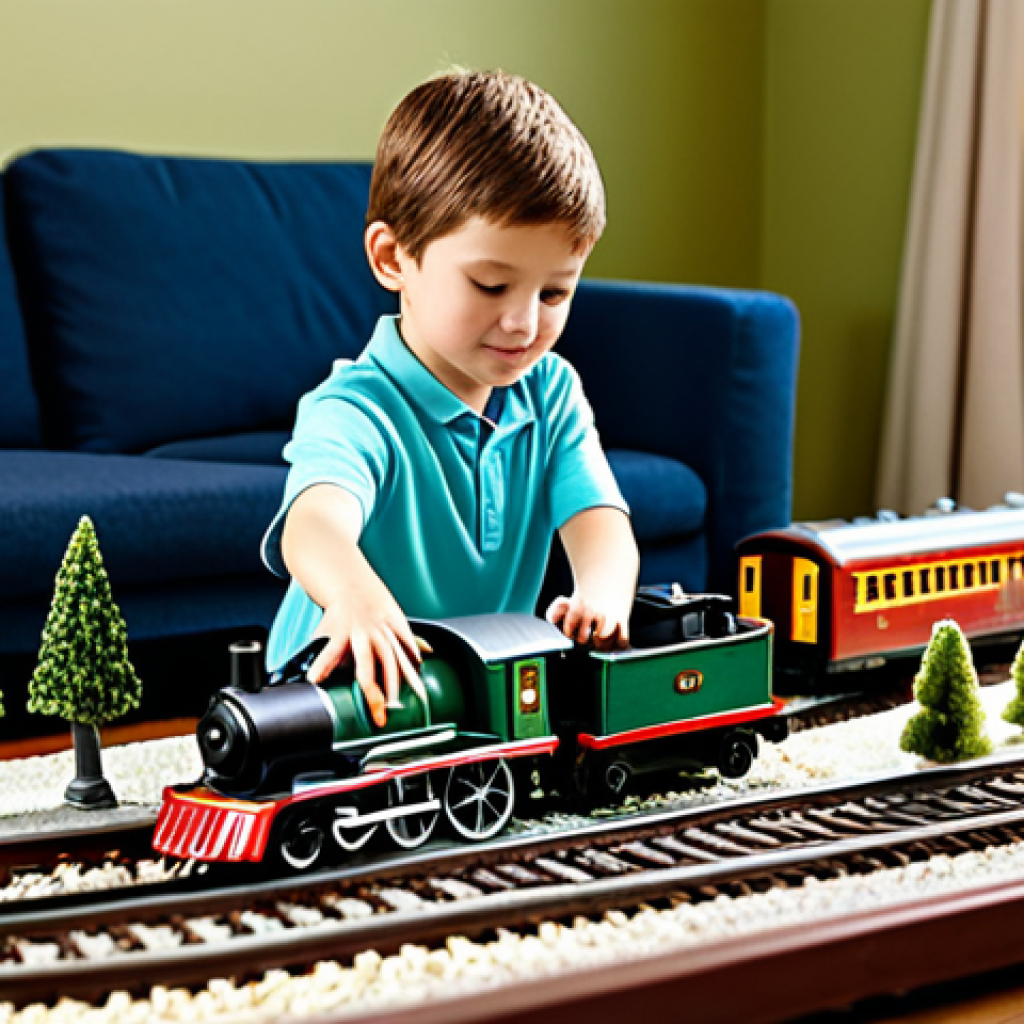
There’s something uniquely magical about miniature train sets, isn’t there? I mean, I’ve personally seen the sheer wonder on a child’s face the moment a tiny engine chugs along the tracks, navigating curves and tunnels.
For my own little one, the Titipo miniature train set isn’t just a toy; it’s a gateway to hours of imaginative adventures, a quiet escape from the digital cacophony that surrounds our kids today.
In an era where screen time feels almost unavoidable, finding a toy that genuinely captivates without needing a battery recharge every hour or a new app update is truly a breath of fresh air.
From my direct experience, these sets nurture not just creativity but also crucial fine motor skills and spatial reasoning, which are so vital for development.
It’s fascinating how even a simple, tangible toy like this beautifully aligns with current trends focusing on active play and fostering early STEM concepts, a welcome counterpoint to the increasingly virtual world.
The joy of setting up intricate layouts, the satisfaction of watching the trains run flawlessly – it’s a timeless appeal. And honestly, it provides a fantastic opportunity for parents and kids to connect, building something together, something real.
So, if you’re curious about unlocking this classic play experience and understanding its deeper benefits, let’s explore it in detail below.
The Unrivaled Charm of Miniature Railroading
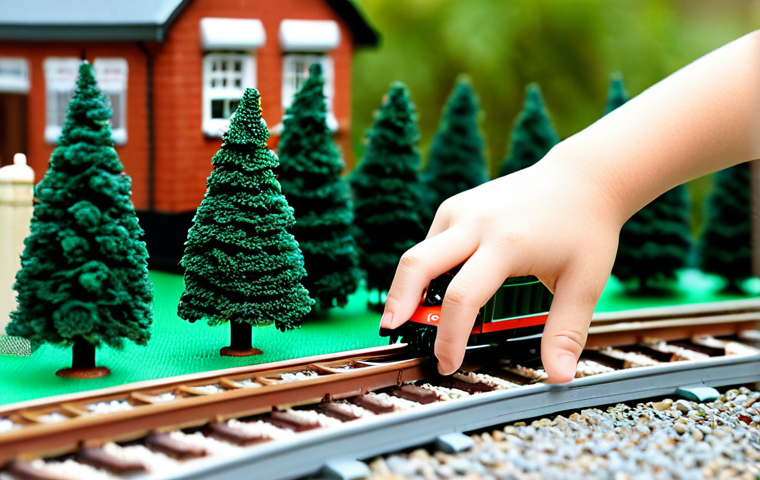
There’s an undeniable allure to miniature train sets that transcends generations. It’s more than just a collection of tiny locomotives and wagons; it’s a window into a meticulously crafted world that operates at its own pace. From the moment I first saw the intricate details on a classic engine, I was captivated. It evokes a powerful sense of nostalgia for many adults, reminding them of simpler times, perhaps even their own childhoods spent watching trains chug by or setting up a small oval track under a Christmas tree. For children, it’s pure magic—a tangible, moving narrative they can control. I’ve personally observed how the rhythmic click-clack of the wheels on the tracks can be incredibly soothing, almost meditative, a stark contrast to the often overstimulating digital entertainment that dominates modern life. This timeless appeal isn’t just about the trains themselves, but the entire ecosystem of miniature landscapes, bustling stations, and tiny figures that bring these Lilliputian worlds to life, allowing for endless imaginative scenarios to unfold right before your eyes. It’s a sensory experience: the visual delight of the moving parts, the subtle sounds, and the tactile joy of connecting track pieces.
1. A Timeless Appeal in a Digital Age
In a world increasingly dominated by screens, apps, and virtual realities, the enduring fascination with miniature train sets stands as a testament to the human desire for tangible, interactive play. I’ve noticed a profound difference in my child’s engagement when playing with a physical train set versus a tablet. There’s a focused, quiet determination in their eyes as they lay tracks, arrange scenery, and carefully position trains. This isn’t passive consumption; it’s active creation and manipulation. It’s a fantastic antidote to the fleeting, often superficial engagement offered by digital games. From my direct experience, these sets offer a different kind of reward—the satisfaction of building something real, watching it work, and then orchestrating stories within that world. It’s not about winning points or reaching the next level; it’s about the process itself, the continuous flow of imaginative play. This kind of interaction fosters patience and a deeper connection to the play itself, encouraging children to think beyond immediate gratification and to immerse themselves in a narrative they are actively building and controlling, which is something I deeply value in their development.
2. Sparking Imagination and Storytelling
One of the most remarkable aspects of miniature train sets is their unparalleled ability to ignite the imagination. Each train, each car, each piece of scenery becomes a character or a setting in an unfolding drama. I’ve spent countless hours watching my child invent elaborate stories about the trains’ journeys—who the passengers are, what cargo they’re carrying, what adventures they’ll encounter on the tracks. Is this train rushing to deliver important mail, or is it a leisurely passenger train carrying vacationers to a sunny beach? The possibilities are truly boundless. This isn’t just idle play; it’s a powerful exercise in narrative construction, encouraging children to develop plotlines, invent dialogues, and explore different scenarios. They learn about cause and effect, problem-solving (when a train derails, for instance), and even basic logistics. What I find particularly fascinating is how these sets provide a tangible canvas for children to act out their inner worlds, their dreams, and even their understanding of the world around them. It’s a safe, controlled environment where they can be the director, the conductor, and the master storyteller all at once. This active form of imaginative play is crucial for cognitive development, fostering creativity that extends far beyond the playroom.
Nurturing Development Through Play: Beyond the Tracks
Beyond the sheer joy and imaginative potential, miniature train sets are surprisingly powerful tools for fostering essential developmental skills. When I first considered a train set, I saw it primarily as a fun toy. However, as I watched my child interact with it, I quickly realized the profound educational benefits embedded in this classic play experience. Every aspect, from connecting the track pieces to carefully placing the train on the rails, requires a degree of precision and cognitive engagement that truly surprised me. It’s not just about pushing a button; it’s about understanding how things fit together, how movement occurs, and how small actions lead to larger outcomes. This hands-on learning is invaluable, providing practical lessons that resonate more deeply than abstract concepts learned from a screen. The multi-faceted nature of this play means that children are constantly engaging different parts of their brain, from spatial reasoning to fine motor control, all while having an absolute blast. It’s a stealthy form of education, where learning feels like play, and the results are clearly visible in their growing abilities.
1. Enhancing Fine Motor Skills and Hand-Eye Coordination
One of the most immediate benefits I observed was the significant improvement in fine motor skills and hand-eye coordination. Connecting the track pieces requires a surprising amount of dexterity. Children need to align small tabs with slots, apply just the right amount of pressure, and then snap them together. This repetitive action is an excellent workout for tiny fingers and hands, strengthening muscles and improving precision. Then, there’s the delicate task of carefully placing the train cars onto the tracks, ensuring all the wheels are properly seated on the rails. It sounds simple, but for a young child, it demands focus and a steady hand. My own experience has shown me that this seemingly simple play refines their ability to manipulate small objects with accuracy, a skill that is fundamental for tasks like writing, drawing, and even self-feeding. It’s a natural, engaging way to develop these crucial physical abilities without it ever feeling like a chore or an exercise. The immediate feedback—a track piece clicks into place, a train runs smoothly—reinforces their efforts and encourages them to continue refining their movements.
2. Cultivating Problem-Solving and Spatial Reasoning
Miniature train sets are inherently problem-solving puzzles in disguise. As children design their layouts, they encounter various challenges that require spatial reasoning and logical thinking. How can I connect this curve to that straight piece? Will this bridge fit here, or do I need to re-route the track? When a train derails, what could be the cause? Is a track piece loose, or is the train overloaded? I’ve seen my child, initially frustrated, then methodically test different solutions until the train runs smoothly again. This process of trial and error, identifying obstacles, and devising solutions is invaluable for developing critical thinking skills. They learn to visualize the entire layout, understand how different parts interact, and anticipate potential issues. It’s a hands-on introduction to engineering principles, physics, and even basic geometry, all without formal instruction. This active engagement with problem-solving cultivates a resilient mindset and the ability to think through challenges systematically, skills that are transferable to countless real-life situations far beyond the playroom.
3. Introducing Basic STEM Principles Through Play
Perhaps one of the most exciting aspects, from an educational standpoint, is how miniature train sets subtly introduce foundational STEM (Science, Technology, Engineering, and Mathematics) concepts. While children are simply playing, they are intuitively learning about:
- Physics: They observe concepts like gravity (trains going downhill), friction (why trains slow down on certain surfaces), and momentum (how a train continues to move after the power is off). They learn about speed and distance as the trains traverse the tracks.
- Engineering: Designing a stable track layout, building bridges, and creating tunnels are all exercises in basic engineering. Children learn about structural integrity and planning. I’ve seen firsthand how they naturally experiment with different track configurations to achieve a desired outcome, like a loop or a figure-eight.
- Mathematics: There’s an inherent understanding of spatial relationships, symmetry, and even measurement when planning a layout that fits within a specific space. Counting cars, tracks, and figures also reinforces basic numerical literacy.
- Technology: Even simple sets involve basic electrical circuits for the motor. While not explicit, the idea of power flowing through tracks to move a train introduces rudimentary technological concepts.
It’s truly fascinating to see how these complex ideas are absorbed naturally through play, setting a strong foundation for future learning without any pressure or formal instruction. I believe this type of play-based learning is incredibly effective because it’s driven by curiosity and discovery, making the concepts stick in a much more meaningful way.
Crafting Your Own World: The Joy of Layout Design
The true magic of miniature train sets often lies not just in the trains themselves, but in the boundless possibilities of creating an entire miniature world around them. This is where the creative process truly takes flight, and I’ve found it to be an incredibly rewarding experience, both for my child and for me as a parent. It’s an invitation to become a miniature urban planner, a landscape architect, and a storyteller all at once. The initial oval track is just the beginning; from there, the imagination takes over, transforming a flat surface into a vibrant, dynamic landscape. This process of designing, building, and then iterating on a layout is deeply satisfying and offers a unique blend of artistic expression and logical problem-solving. I’ve spent hours with my child, discussing where a station might go, how a tunnel could be incorporated, or what kind of terrain would make the most exciting journey for our tiny passengers. It’s a collaborative art project that evolves with every play session, reflecting new ideas and expanding narratives.
1. The Art of Track Configuration
Laying out the tracks is perhaps the most fundamental and engaging aspect of designing your train world. It starts simply enough with an oval or a circle, but quickly expands into a complex network of possibilities. Children learn about concepts like loops, dead ends, switches, and bridges. They experiment with different track geometries to achieve specific outcomes, like creating a long, winding journey or a compact, bustling railyard. I’ve personally seen the intense focus on my child’s face as they puzzle over how to connect two seemingly disparate track pieces, or how to create a gradient for a hill. This isn’t just assembly; it’s a creative engineering challenge. They learn about spatial awareness and planning, understanding how each piece contributes to the overall flow and functionality of the layout. The satisfaction of finally connecting all the pieces and seeing the train glide smoothly along a newly designed route is immense, a tangible reward for their effort and ingenuity. It’s a continuous lesson in cause and effect and iterative design, as they constantly refine and improve their track configurations.
2. Adding Scenery and Detail for Realism
Once the tracks are laid, the real artistic expression begins with adding scenery and details. This is where the miniature world truly comes alive. From tiny trees and shrubs to miniature buildings, bridges, and tunnels, each addition enhances the realism and narrative potential of the layout. I’ve watched as my child meticulously places miniature figures, invents little parks, or positions tiny cars on a road next to the tracks. This attention to detail transforms a simple track into a bustling town or a tranquil countryside scene. It encourages creativity and observation, prompting children to think about what elements are typically found in a real-world environment and how to replicate them in miniature. This level of immersion greatly enhances imaginative play, making the stories they create even more vivid and engaging. It’s a fantastic opportunity to discuss different environments, occupations, and aspects of community life, all within the context of their own miniature world. It’s truly remarkable how a few carefully chosen accessories can completely change the feel and narrative potential of a train set.
Maintaining the Miniature Marvel: Ensuring Longevity and Performance
Just like their full-sized counterparts, miniature train sets benefit greatly from a little bit of care and attention. From my perspective, ensuring the longevity and smooth operation of these sets is part of the fun and a valuable lesson in responsibility. It’s not just about playing; it’s about understanding how to maintain something you value. I’ve seen firsthand how a little bit of regular maintenance can prevent frustrating interruptions during playtime and keep the trains chugging along happily for years. This isn’t about complex repairs; it’s about simple, consistent habits that make a big difference. It’s also an excellent opportunity to teach children about the importance of looking after their belongings, understanding basic mechanics, and appreciating the effort that goes into keeping things in good working order. There’s a certain pride that comes with knowing you’ve kept a beloved toy in pristine condition, and that feeling extends to the joy of continuous, uninterrupted play.
1. Simple Steps for Sustained Performance
Keeping a miniature train set running smoothly involves a few straightforward steps that can easily be incorporated into play routines. Based on my experience, these are key:
- Track Cleaning: Dust and grime can accumulate on the track rails, impeding electrical contact and causing trains to stutter or stop. I make it a point to regularly wipe down the tracks with a clean, lint-free cloth, sometimes slightly dampened with rubbing alcohol (ensuring proper ventilation and supervision). This simple act dramatically improves performance.
- Wheel Cleaning: The wheels of the locomotives and cars can also pick up debris. Gently cleaning the wheels with a cotton swab dipped in rubbing alcohol ensures good electrical pickup and smooth movement.
- Proper Storage: When not in use, storing the trains and track pieces properly in their original boxes or dedicated containers helps prevent damage, dust accumulation, and loss of smaller parts. This is something I emphasize with my child.
- Battery Check (if applicable): For battery-operated sets, regularly checking and replacing batteries as needed ensures consistent power to the engines.
These small, consistent efforts pay huge dividends in terms of play enjoyment and extending the life of the set. It becomes a natural part of the play cycle, instilling good habits.
2. Troubleshooting Common Issues
Even with the best maintenance, sometimes miniature trains encounter little snags. Learning to troubleshoot these minor issues is another great skill that children (and parents!) can develop. I’ve found that most problems are easily solvable with a bit of observation and logic.
- Derailments: Often caused by improperly connected track pieces, an uneven surface, or trains being placed too quickly onto the track. Check track connections and ensure the surface is flat.
- Stuttering/Stopping Trains: Usually an indication of dirty tracks or wheels, or low batteries. Clean components thoroughly and replace batteries.
- Switches Not Working: Ensure the manual switch lever is fully engaged in one direction or the other. Sometimes a small piece of debris can obstruct the mechanism.
Encouraging children to identify the problem and try to fix it themselves (with guidance, of course) empowers them and builds confidence. It reinforces the idea that challenges can be overcome with a little bit of investigation and perseverance. This hands-on problem-solving is a cornerstone of critical thinking, and it’s always satisfying when you get the train back on track and running smoothly again!
Expanding the Horizon: Accessories and Advanced Setups
What I’ve truly come to appreciate about miniature train sets is their incredible expandability. A starter set is just that—a starting point. The world of miniature railroading is vast and offers endless opportunities for expansion, customization, and increasingly complex layouts. This isn’t a toy that’s quickly outgrown; rather, it grows with your child’s interests and capabilities. From my perspective, this aspect significantly enhances the long-term value and appeal of these sets. It provides ongoing engagement and new challenges, preventing boredom and encouraging continuous exploration of new possibilities. The excitement of discovering new accessories, whether it’s a new type of train car, a detailed building, or an advanced track piece, adds another layer of joy to the hobby. It transforms a simple toy into a rich, evolving ecosystem of play and learning.
1. Discovering Compatible Add-Ons
The variety of available add-ons for miniature train sets is truly impressive, allowing you to personalize your layout and enhance your play experience. From my experience, introducing new elements periodically keeps the interest levels high and sparks fresh imaginative scenarios.
Here are some popular categories of additions that can transform your basic set:
| Accessory Type | Description | Impact on Play |
|---|---|---|
| Additional Track Pieces | Straight, curved, crossover, and specialized track sections. | Enables creation of larger, more complex layouts; increases dwell time. |
| Buildings & Structures | Stations, houses, factories, bridges, tunnels, water towers. | Adds realism and visual interest; facilitates storytelling. |
| Vehicles & Figures | Cars, trucks, buses, people, animals, street furniture. | Populates the miniature world; enhances narrative depth. |
| Scenery Items | Trees, shrubs, grass mats, rocks, water features. | Creates realistic landscapes; improves aesthetic appeal. |
| Additional Rolling Stock | New locomotives, passenger cars, freight cars (e.g., flatbeds, tankers). | Introduces variety in train operations; supports different play themes. |
Each new piece opens up new avenues for play and creative expression, encouraging children to think about how these elements fit into their evolving miniature world. It’s like adding new chapters to an ongoing story.
2. Exploring Advanced Features and Digital Control
For those looking to delve deeper into the hobby, many miniature train sets, particularly those aimed at older children or adults, offer advanced features like digital control systems (DCC – Digital Command Control). While my primary focus has been on simpler sets for younger children, I’ve observed the incredible complexity and realism these systems can offer. DCC allows for independent control of multiple trains on the same track, realistic sound effects, and even control over lighting and accessories. It’s a leap into more sophisticated technology, appealing to those with a passion for intricate details and precise operation. This progression demonstrates that miniature railroading is a hobby with a long learning curve, offering new levels of engagement as skills and interests develop. It’s a testament to the depth of the hobby that it can cater to various skill levels, from simple push-and-play to complex digital operations, ensuring sustained interest over many years.
The Enduring Legacy: Why These Sets Still Matter
In a rapidly changing world, where technology constantly pushes the boundaries of what’s possible, the enduring appeal of something as seemingly simple as a miniature train set might seem surprising. Yet, from my vantage point as a parent deeply invested in meaningful play, I firmly believe that these sets hold a unique and irreplaceable value. They represent a connection to a past that cherishes hands-on creation and tangible interaction, offering a much-needed counterpoint to our increasingly digital lives. This isn’t just about nostalgia; it’s about the fundamental human need for connection, creativity, and the satisfaction of building something real with your own two hands. The legacy of miniature trains is not just in their history, but in their continued ability to foster development, spark imagination, and bring people together across generations. It’s a legacy of genuine play, something I personally believe is more vital now than ever before.
1. Bridging Generations Through Shared Hobbies
One of the most heartwarming aspects of miniature train sets is their incredible ability to bridge generational gaps. I’ve personally witnessed grandparents, parents, and children huddled together around a train layout, all equally engrossed in the movement of the tiny engines. It’s a shared language, a common ground where age disappears, and everyone becomes a participant in the same magical world. For many adults, it rekindles cherished childhood memories, offering a beautiful opportunity to relive those moments with their own children or grandchildren. For children, it’s a chance to learn from and connect with older family members, sharing skills and stories that might otherwise never be exchanged. This collaborative play fosters strong family bonds, creating lasting memories and a sense of shared accomplishment. It’s truly a unique hobby that allows for such rich intergenerational interaction, proving that some forms of play are truly timeless in their power to unite people.
2. The Value of Tangible Play in a Virtual World
As screens proliferate and virtual experiences become increasingly sophisticated, the importance of tangible, physical play has never been more evident. Miniature train sets offer a refreshing return to basics: a physical object that can be touched, manipulated, and interacted with in three dimensions. I’ve found that this kind of play grounds children in the real world, allowing them to develop a deeper understanding of cause and effect through direct action rather than abstract button presses. It encourages spatial awareness, tactile learning, and a sense of physical accomplishment that digital experiences often cannot replicate. In a world where immediate gratification is often the norm, the patience required to build a layout, troubleshoot a derailment, or simply watch a train complete its journey teaches invaluable lessons about perseverance and delayed gratification. This tangible interaction is crucial for holistic development, providing a sensory richness and a depth of engagement that digital play, for all its wonders, simply cannot always match. It’s a powerful reminder that sometimes, the simplest toys offer the most profound benefits, providing real connections and real learning in a world that desperately needs it.
Wrapping Up
As I reflect on the rhythmic clicks and clacks, and the countless stories spun around our miniature train sets, it’s abundantly clear this isn’t just a fleeting pastime. It’s a foundational experience that offers so much more than meets the eye. From nurturing creativity and problem-solving to bridging the gap between generations, these little marvels hold an enduring charm in our fast-paced digital world. I genuinely believe that investing in a miniature train set is investing in rich, tangible play that builds skills, sparks joy, and creates unforgettable memories for everyone involved. So, if you’re looking for a timeless activity that truly delivers on all fronts, perhaps it’s time to embark on your own miniature railroading adventure.
Good to Know
1. Consider Age and Scale: Miniature train sets come in various scales (e.g., N, HO, O, G), each suitable for different spaces and age groups. Larger scales like G-gauge are great for younger kids or outdoor setups, while smaller scales like HO or N are popular for detailed indoor layouts and older enthusiasts.
2. Space Isn’t Always a Barrier: You don’t need an entire room to enjoy miniature trains. Many starter sets can be set up on a small table or even a temporary floor space, making it accessible even for those with limited room.
3. Starter Kits Are Excellent Entry Points: If you’re new to the hobby, a comprehensive starter kit provides everything you need to begin—a locomotive, rolling stock, track pieces, and a power supply. It’s a fantastic way to dip your toes in without overwhelming yourself.
4. The Community is Welcoming: There’s a vibrant and supportive community around miniature railroading. Online forums, local clubs, and exhibitions offer incredible opportunities to learn, share tips, and connect with fellow enthusiasts, from beginners to seasoned veterans.
5. Look for Second-Hand Opportunities: Don’t hesitate to explore second-hand markets, local hobby shops, or estate sales. You can often find great deals on track pieces, rolling stock, and scenery items, which allows you to expand your collection affordably.
Key Takeaways
Miniature train sets are far more than simple toys; they are powerful developmental tools that ignite imagination and foster storytelling abilities. They significantly enhance fine motor skills, hand-eye coordination, and cultivate crucial problem-solving and spatial reasoning abilities. Moreover, these sets subtly introduce fundamental STEM principles through engaging, hands-on play. The process of designing and building layouts offers immense creative satisfaction, while routine maintenance instills valuable lessons in responsibility. Critically, miniature train sets bridge generational gaps, creating shared hobbies and providing essential tangible play experiences in an increasingly virtual world.
Frequently Asked Questions (FAQ) 📖
Q: With so many digital distractions vying for our kids’ attention today, how do traditional toys like the Titipo miniature train set genuinely contribute to a child’s development, especially compared to screen-based activities?
A: Oh, it’s such a breath of fresh air, honestly. From what I’ve personally observed with my own child, and talking to other parents, these train sets are an absolute powerhouse for development in ways screens just can’t replicate.
Think about it: a child has to physically pick up the track pieces, snap them together, and then carefully place the trains on the rails. That’s incredible for fine motor skills and hand-eye coordination.
I remember watching my little one trying to connect a particularly tricky curve, their brow furrowed in concentration, and the sheer triumph when it finally clicked into place.
It’s also a fantastic exercise in spatial reasoning – figuring out how tracks fit to make a loop or avoid obstacles, planning out the layout. And the imaginative play?
Unrestricted! There’s no predetermined storyline or character; it’s all in their head. The trains become adventurers, the living room floor a vast landscape.
This kind of tangible, hands-on engagement fosters problem-solving, creativity, and a quiet focus that’s increasingly rare. It’s a beautiful counterpoint to the overstimulated world, offering a deeply satisfying, active play experience that develops their brains and bodies in a truly fundamental way.
Q: The idea of building something together sounds lovely, but does this play really foster a deeper connection between parents and kids, and how does it manage to keep children engaged for the long haul in a world of fleeting interests?
A: That’s such a valid question because, let’s face it, kids’ interests can be a whirlwind sometimes! But here’s the magic with these train sets: it’s not just a toy they play with; it’s something you build together.
I can tell you from countless afternoons on the floor, sprawled out next to my child, we’re planning the next tunnel, deciding which bridge to use, or fixing a derailment – it naturally sparks conversation.
We’re problem-solving as a team, sharing laughs, and creating little mini-worlds. It’s a shared activity that genuinely feels collaborative, not just passive observation.
And the long-term engagement? It’s phenomenal because it’s endlessly expandable and customizable. It’s not a game with an end goal; it’s a canvas.
You can add new tracks, different trains, build landscapes around them. My child discovers new ways to play every time, imagining different scenarios for the trains.
It’s this open-ended nature that keeps them coming back, year after year, offering a familiar comfort and a boundless outlet for their ever-evolving imaginations.
It truly is a timeless appeal.
Q: You mentioned miniature train sets aligning with early STEM concepts. Can you elaborate on how a relatively simple toy like this actually introduces complex ideas like engineering or physics to young children, and what practical value it holds for parents considering a purchase?
A: Absolutely! It might seem like just fun and games, but miniature train sets are surprisingly robust, hands-on STEM teachers in disguise. Think about it: designing a track layout is essentially a basic form of engineering.
Children are learning about structure, stability, and connectivity – how pieces fit together to create a continuous path. When a train derails, they’re implicitly learning about cause and effect, and often, basic physics – what happens if the curve is too sharp or the slope too steep?
They experiment, troubleshoot, and learn through trial and error, which is the very essence of scientific inquiry and problem-solving. As for practical value for parents, it’s immense.
These aren’t flimsy, single-use toys. They’re typically quite durable, designed to withstand countless hours of play, meaning they offer fantastic longevity and great value for your investment.
Plus, the modular nature means you can start with a basic set and expand over time, maybe for birthdays or holidays, which avoids the dreaded ‘toy fatigue.’ It’s a toy that grows with your child, encourages independent play but also fosters connection, and teaches fundamental concepts without them even realizing it.
It’s truly a smart, enduring choice in today’s often disposable toy market.
📚 References
Wikipedia Encyclopedia
구글 검색 결과
구글 검색 결과
구글 검색 결과
구글 검색 결과
구글 검색 결과